Wang Sicong’s prediction is becoming a reality.
The increasingly expensive charging prices of power banks have become a drawback for many consumers, and have also been criticized by more consumers.
According to statistics, when the power bank business first started in 2017, the price was generally “the first 30 minutes or even 1 hour are free, and the excess time is 1 yuan/hour, with a daily cap of 10 yuan/hour.”
At present, the “three electricity and one beast” (street electricity, small electricity, incoming calls, monsters) generally range from 3 yuan to 6 yuan per hour, and the daily cap price ranges from 30 yuan to 60 yuan. As a service-oriented product, power bank has begun to deviate from its “original intention.” This industry began to change from a “good story” to a “public target”.
It can be seen that the shared power bank industry is no longer a good business.
Behind the decline in reputation, shared power banks are slowly following in the footsteps of shared bicycles. Businesses that rely on constant price increases to ensure profitable growth will eventually be difficult to sustain.
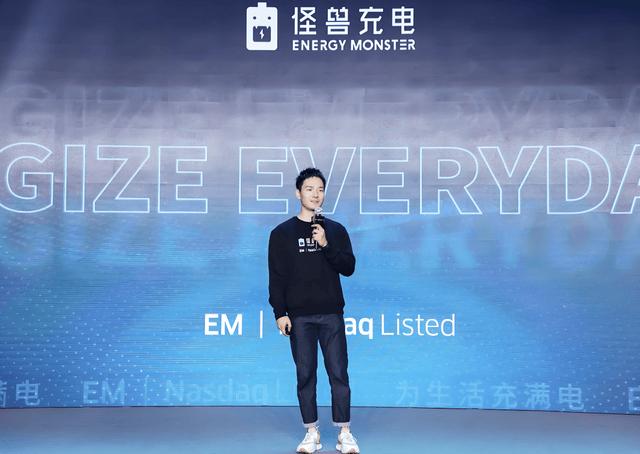
On January 6, Monster Charge, the only listed company in the shared power bank industry, announced that it planned to privatize and delist.
The announcement stated that on January 5, the company received a preliminary non-binding proposal from Chenchen Capital and management, proposing to acquire all of the company’s issued ordinary shares at a cash price of US$1.25 per American depositary receipt. The price represents a premium of approximately 74.8% to the latest closing price.
After the news was released, Monster’s stock price opened high and moved low on January 8, with an increase of 38.46%. As of the close of the day, the stock price closed at US$0.99 per share. It is worth noting that the closing price did not reach the price at which it was taken private.
The market’s reaction speaks for itself.
If calculated from the high point, Monster Charge’s stock price has dropped by more than 90%, and its market value has evaporated by more than 2.3 billion US dollars, or approximately 16.86 billion yuan. Currently, its market value is only 254 million US dollars.
The rising “show”
If one keyword were used to describe Monster Charging, it would definitely be “open high and go low.”
We can see the shadow of Jumei Premium in Monster Charge. Although Jumei founder Chen Ou also bet on the shared power bank track, he was not as “lucky” as Monster Charge.
Data shows that Monster Charging was founded in 2017, and most of its founding teams come from Meituan, Uber, Alibaba, Tuniu and other companies. Its founder and CEO Cai Guangyuan was the general manager and national marketing director of Uber Shanghai. CMO Zhang Yaoyu of its founding team also came from Uber, CTO Li Xiaowei came from Tuniu, CFO Xin Yi came from Alibaba, and COO Xu Peifeng was one of the founding team members of Meituan.
As the latest company to start “Three Electrics and One Beast”, Monster Charge is the luckiest company.
According to relevant data, as of 2020, Monster Charging’s market share has reached 34.4%, ranking first in the industry. There are more than 664,000 merchant locations and 5 million mobile power supplies, with a cumulative registered users of more than 219 million.
The monsters come first, which is actually the epitome of the Internet model.
That is, through the “unlimited money burning” model, we first achieve large scale, and then after becoming the leader, we can achieve gradual growth in profits through price increases.
According to relevant information, before Monster Charge’s IPO, a total of 6 rounds of financing were conducted, with a cumulative financing scale of more than 2 billion yuan. The investors behind it include Alibaba, SoftBank Asia, Xiaomi, Shunwei Capital, Hillhouse Ventures and other well-known investment institutions. With the support of capital, Monster Charge also “lived up to expectations” and was the first to land in the capital market.


