The major event this week is undoubtedly Trump’s formal inauguration and the high probability that the Bank of Japan will raise interest rates by 25 basis points this Friday. Judging from current information, Trump will sign hundreds of executive orders on his first day in the White House. Tariffs, immigration and other policies are undoubtedly the issues that the market is most concerned about. Judging from the statement of Finance Minister-designate Bessent last week, tax cuts will also be an important task of the Trump administration. In addition, he also emphasized the importance of maintaining the U.S. dollar’s reserve currency status, which also means that the Trump administration will Relatively inclined to a strong dollar policy.
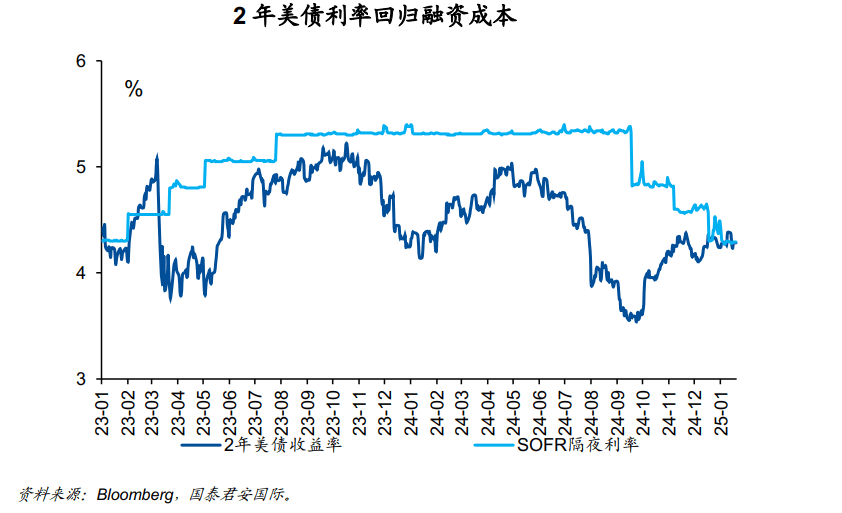
Judging from the performance of the U.S. economy, the latest U.S. inflation report released last week showed that overall CPI inflation in December was basically in line with expectations, but core CPI inflation further eased. According to the statement of Waller, a popular member of the Federal Reserve Board of Governors, the U.S. CPI data released on January 15th is very good. If more such data continues to be obtained, it is very likely that the Federal Reserve will cut interest rates in the first half of 2025, and does not even rule out an interest rate cut in March. possibility. This means that the Federal Reserve may cut interest rates three times or more this year. Compared with the current expectations of less than two interest rate cuts, this is obviously a completely different path of interest rate cuts.
For the bond market, the recent sell-off in long-dated bonds largely reflects market pessimism about the medium-term inflation outlook. Since “reflation” is still the mainstream view, it is difficult for long-term bonds to achieve strong performance in the short term. From a trading perspective, the bond market will determine the future trading direction based on the actual actions of the Federal Reserve, which is a typical “shoot only when you see a shadow.” Of course, once investors determine that the Fed will take action, interest rates will fall very quickly. After all, interest rate cuts will bring about a real decline in financing costs.
Another thing worth paying attention to is that Japan is also about to hold its first interest rate meeting in 2025, and the market generally believes that the Bank of Japan is likely to raise interest rates at this week’s meeting. Affected by this, even with the recent strong performance of the US dollar, the appreciation rate of the yen against the US dollar in the past week still exceeded 1%. Looking forward, given the Japanese yen’s role as a ballast for global currency interest rates, the Bank of Japan’s interest rate hike at the time when Trump is about to take office will undoubtedly further promote the readjustment of the global capital asset allocation structure. However, considering the impact of the appreciation of the yen on Japan’s exports, the Bank of Japan is bound to be cautious in raising interest rates. In other words, even if the Bank of Japan raises interest rates, it will most likely not change the existing low interest rate environment for the yen.
The major event this week is undoubtedly Trump’s formal inauguration and the high probability that the Bank of Japan will raise interest rates by 25 basis points this Friday. Judging from the current information from all parties, Trump will sign hundreds of executive orders on his first day in the White House. Tariffs, immigration and other policies are undoubtedly the issues that financial markets are most concerned about. Judging from the statement of Finance Minister-designate Bessent last week, tax cuts will also be one of the important tasks of the Trump administration. In addition, Bessent also emphasized the importance of maintaining the U.S. dollar’s reserve currency status, which also means that Trump’s The Trump administration will be relatively inclined to a strong dollar policy.
Judging from the performance of the U.S. economy, the latest U.S. inflation report released last week showed that overall CPI inflation in December was basically in line with period, but core CPI inflation further eased. U.S. CPI increased by 2.9% year-on-year in December, in line with market expectations; month-on-month growth 0.4%, slightly higher than market expectations. However, core CPI growth fell back to 3.2% year-on-year, the first decrease in six months and lower than expected.
The month-on-month increase of 0.2% was also lower than expectations and the previous value.


