Expecting a “Mini Spring”
Zhang Dawei, Chief Analyst at Centaline Property, analyzed that from the perspective of the real estate market, the market is still in a downward adjustment phase, with projects in various regions mainly selling smoothly without large-scale launches, and discount levels generally continuing previous promotions. The market enthusiasm has cooled significantly compared to before the Spring Festival, and regional differentiation remains the mainstream characteristic of the real estate market in various regions.
Zhang Dawei stated that from the actual market transaction situation during the Spring Festival holiday, first- and second-tier cities basically停滞 (stagnated) due to the holiday, but it is expected that after entering March, the market may experience a “mini spring” trend with a certain level of enthusiasm. During the Spring Festival, third- and fourth-tier cities did not experience a significant influx of home buyers returning to their hometowns, and transaction volumes and prices continued to adjust.
The China Index Academy analyzed that after multiple rounds of adjustments, housing prices have reached a reasonable level, and the real estate market is expected to recover in 2025. The “mini spring” in first-tier cities is worth anticipating. It is expected that after the Spring Festival holiday, the online transaction volume of new and second-hand residential properties will rebound to some extent, and overall data in the first quarter will remain stable.
Intensive Introduction of Favorable Policies
It is worth mentioning that during the Spring Festival, many regions launched diverse “Welcome the New Year, Purchase New Homes” activities in terms of form and content to promote the stabilization and recovery of the real estate market.
Significant progress has been made in the “acquisition and storage” of affordable housing in many regions. Official data shows that over 60 cities have expressed support for “acquisition and storage” efforts, and more than 32 cities have released details on the acquisition and storage of existing homes. More than 10 cities, including Guiyang, Changchun, and Baoding, have implemented projects to acquire commercial residential properties, raising over 150,000 units of affordable housing.
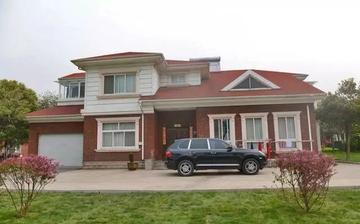
Currently, Guiyang has acquired 5,162 units of existing commercial residential properties, with over 3,500 units renovated and put into use, solving the housing needs of over 4,100 residents. Changchun has acquired 6,837 units of existing commercial residential properties for use as affordable housing, which can increase the supply of affordable housing by 11,300 units (rooms) after renovation. Hefei has acquired 5,733 units of existing commercial residential properties. Fuzhou has acquired 9,501 units of existing commercial residential properties for use as affordable rental housing, with the first batch of renovated affordable rental housing located in the central urban area of Fuzhou.
As one of the first cities to explore the acquisition of existing commercial residential properties for use as affordable housing, Zhengzhou has, to date, acquired 96 projects with over 120,000 units of housing, covering a total construction area of over 5 million square meters. Currently, 86,000 units have been put into the market as talent apartments.
CRIC analyzed that with the continuous implementation of policies aimed at “stabilizing and recovering” the market, consumer confidence is gradually recovering. Transaction volumes, housing prices, and completion rates are expected to continue improving at the beginning of the year. The real estate industry is entering a new balance cycle, and commodity residential property sales are expected to stabilize throughout 2025. It is expected that the stabilization of the real estate market will be basically achieved in the first half of 2025, and a recovery trend will emerge in the second half.


