The extended eight-day Spring Festival holiday saw movement of people at a vast scale as they travelled to partake in the festivities or to be with friends and family, or simply to make the most of their time off. As per China’s Ministry of Transport, the January 28 to February 4 period saw a cross-regional flow of people exceeding 2.3 billion, with the final day of the holiday on Tuesday witnessing peak return passenger traffic. On Monday, the China State Railway Group reported that the country’s railways transported 16.45 million passengers, the highest single-day passenger traffic in the Spring Festival’s history.
It wasn’t just domestic tourism that saw massive volumes – 14.36 million cross-border trips were also recorded, up 6.3 percent from a year earlier. Of these, 958,000 cross-border trips were made by foreign travellers during the holiday, up 22.9 percent from the previous year, with relaxed visa norms and increased connectivity continuing to take effect, the National Immigration Administration reported.
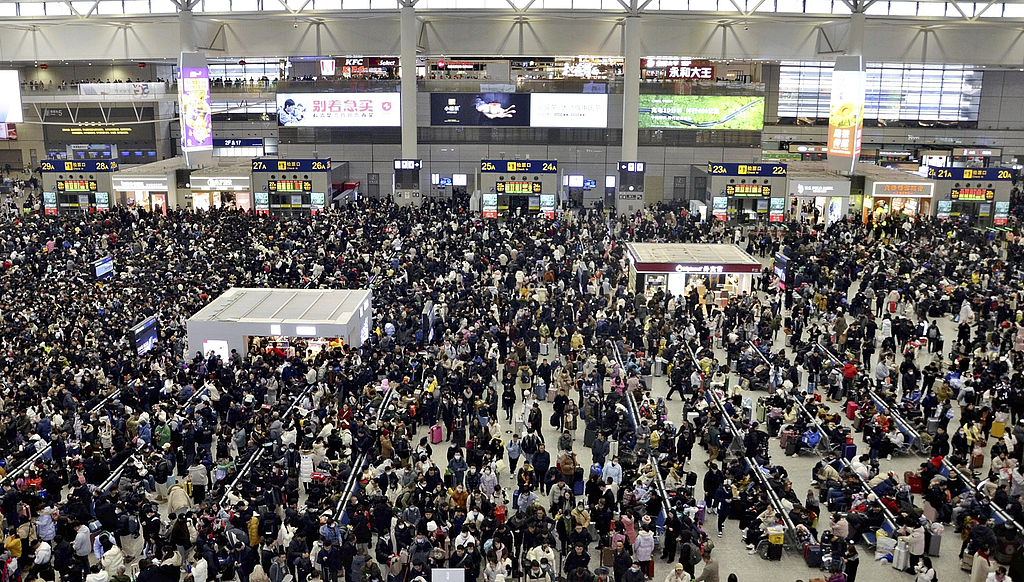
As the Spring Festival holiday comes to an end, large numbers of travellers gather at the Shanghai Hongqiao Station in Shanghai, China, on February 5, 2024. /VCG
Catering to the increased demand required deployment of additional capacities. On the final day of the holiday, railway departments in the Yangtze River Delta region planned for up to 392 additional direct passenger trains and 195 in-line passenger trains, as well as reconnection of up to 113 motor train units to meet the requirements.
In terms of last-mile connectivity, Beijing extended subway operating hours to cater to late-night or early-morning arrivals, while buses’ frequency and intervals were dynamically adjusted, the Ministry of Transport said. The ministry added that taxis and ride-hailing services also bolstered their nighttime “spotting” and scheduling.


