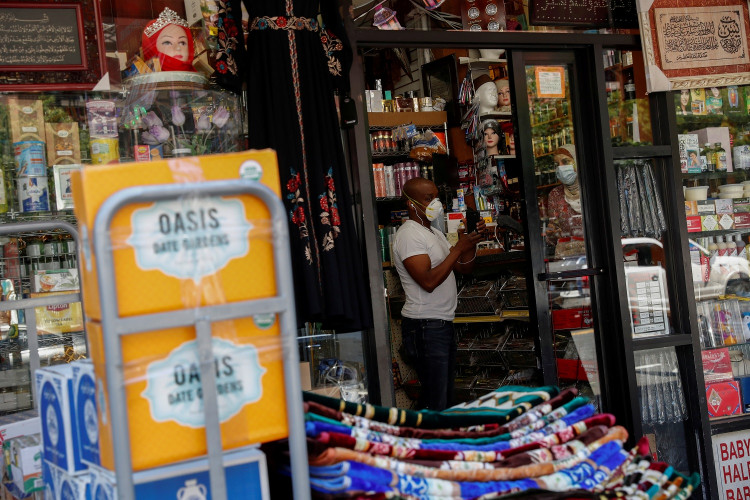
In an unexpected turn of events that could signify emerging challenges for the U.S. economy, retail sales witnessed a significant drop in January, according to data released by the Commerce Department. The 0.8% decrease in consumer spending, adjusted for seasonal factors but not inflation, surpassed economists’ predictions, who had anticipated a more modest decline of 0.3%. This downturn follows a revised gain of 0.4% in December, suggesting a potential shift in consumer behavior at the outset of the year.
Excluding automobile sales, the dip was still pronounced at 0.6%, falling short of the expected 0.2% increase. The data, revealing a mere 0.6% year-over-year growth in sales, underscores the lag in consumer spending relative to inflation rates, which continued to rise in January.
Specific sectors felt the impact more acutely, with sales at building materials and garden stores tumbling by 4.1%. Similarly, miscellaneous store sales and motor vehicle parts retailers experienced declines, alongside a 1.7% drop in gas station sales, correlating with falling fuel prices. In contrast, restaurants and bars provided a glimmer of hope with a 0.7% uptick in sales.
This retail sales control group, a critical component of the Commerce Department’s GDP calculations, also saw a decrease of 0.4%. Such figures are pivotal, given consumer spending’s central role in the U.S.’s robust growth narrative, defying numerous recession forecasts with a 2.8% spending surge in Q4 2023 and a 2.5% annual GDP increase.


