On August 4, the spot exchange rate of RMB against the US dollar rose by more than 300 points, and as of press time, it rose to 7.1755, closing at 16:30 at 7.1766, up 340 basis points from the previous trading day, the increase of the highest since May 6.
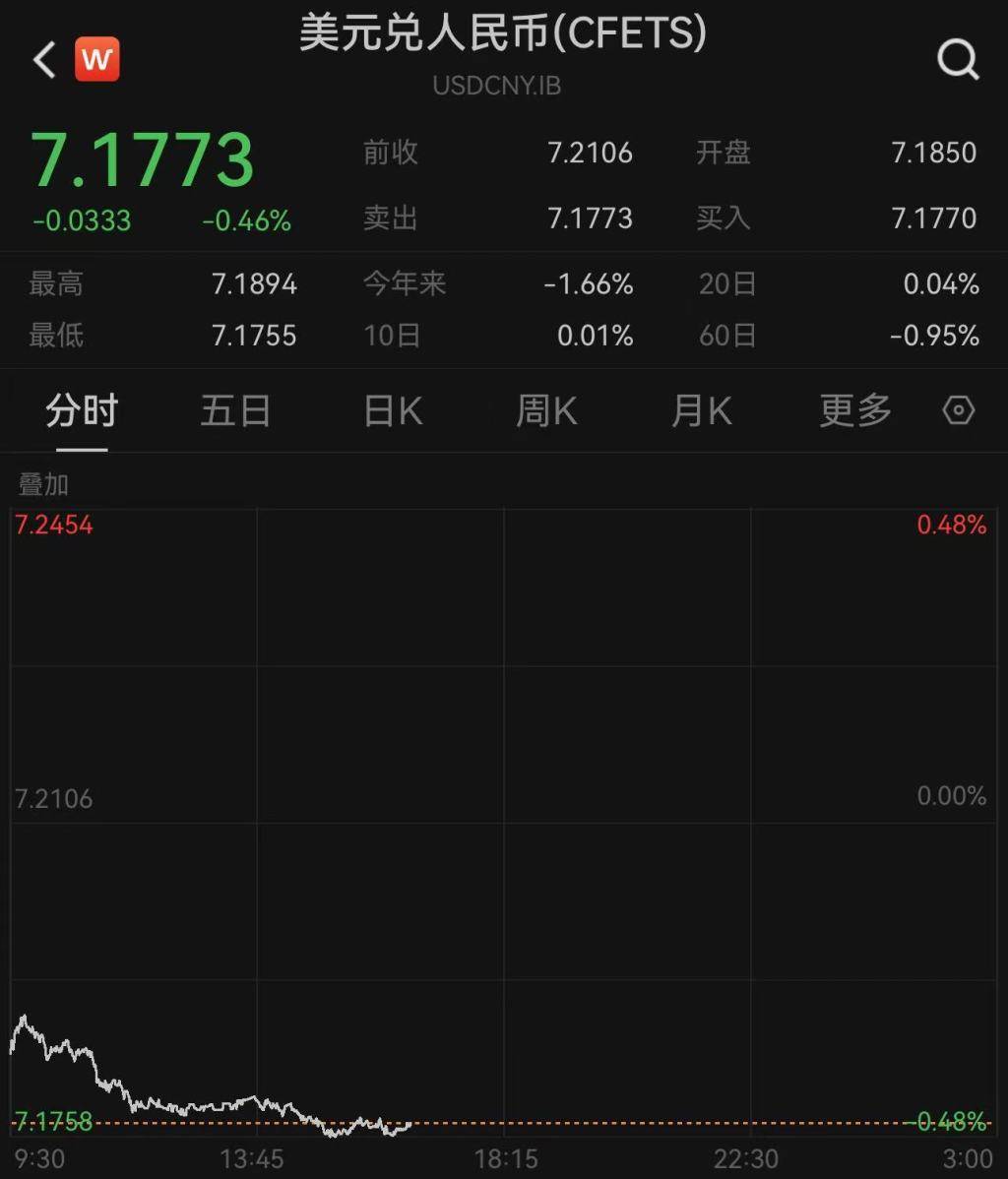
Data from the China Foreign Exchange Trading Center shows that the RMB exchange rate against the US dollar was 7.1395 on August 4, a sharp appreciation of 101 basis points compared with the previous trading day, which hit the highest since January 21, 2025.
The July non-farm employment data released on the evening of last Friday (August 1) was significantly lower than expected, and the US dollar index fell sharply by more than 1.3% on the same day.
In its research report, Industrial Research pointed out that the possibility of US President Trump firing Federal Reserve Chairman Powell is reduced, eases the selling pressure of the US dollar. TGA financing of the US Treasury Department accelerates, and the tightening of US dollar liquidity may push up the US dollar in a pulsed manner. The differentiation of positions shows that the US dollar index is still oversold. Considering the resilience of US economic data, the US dollar index still has the potential to rebound further, with the first target around 101. In terms of RMB exchange rate, the current mid-price is mainly affected by the A-shares and the US dollar index. Before the mid-price turns clearly, the RMB has risen steadily. Factors supporting the appreciation of the RMB mainly include: abundant US dollar liquidity in the country, China-US easing period, and positive linkage of stocks and foreign exchanges; factors affecting the depreciation of the RMB include: rebound of the US dollar index (but because the RMB is undervalued relative to the US dollar index, the impact may be weakened, manifested as a small depreciation elasticity in the face of the appreciation of the US dollar), and closely monitor changes in risk preferences.
When deploying key tasks for the second half of the year in the 2025 second half of the work meeting and the regular and long-term promotion meeting for the rectification of central inspections held on August 1, the People’s Bank of China pointed out that it is necessary to maintain exchange rate flexibility, strengthen expected guidance, and prevent the risk of exchange rate overshoot.


