After Moody’s downgraded the U.S. credit rating from Aaa (highest rating) to Aa1 , the dollar weakened. Moody’s blamed the cuts on the growing fiscal deficit and rising interest rate costs on federal government debt. But on the other hand, the S&P 500 not only rebounded after Trump’s tariff shock in April , but is currently only down 3.4% from its all-time high in February last year . Nevertheless, the annual yield on the 30 -year U.S. Treasury bonds exceeds 5.0% , indicating investors are concerned about the U.S. deficit and debt sustainability.
Although Martin Wolff, a well-known Financial Times columnist, is concerned about Trump’s attack on the dollar, he and most economists believe that the dollar has no suitable alternative. I beg to differ.
Wolf listed five possible alternatives: first, the RMB or the euro can replace the US dollar; second, (the future will be) the world of two to three reserve currencies; third, maintaining the status quo of the US dollar; fourth, global currencies like the Special Drawing Rights ( SDR ); fifth, the world of cryptocurrencies.
I agree that fiat currency is not a real alternative to the US dollar. Although the euro is second only to the dollar, it remains weak. The yen and renminbi are far from its strong competitors. Global currencies like the Special Drawing Rights ( SDR ) are even more terrible, because competing powers cannot agree on the policies of global central banks, and the United States actually has a veto on any International Monetary Fund ( IMF ) reform that allows the expansion of the SDR . Finally, even if the market capitalization of cryptocurrencies has reached $ 1.5 trillion and Bitcoin has exceeded $ 100,000 after the tariff shock , if the world war breaks out and all internet cables and satellites are cut off for security reasons, most people will not be able to use internet currencies.
Therefore, if we cannot trust the artificial governance of any monetary system, then the only safe store of value asset in history is gold.
For most of human history, gold, silver and copper were used as currency. It was not until Isaac Newton, the British Mint director, fixed the pound on a gold-silver ratio in 1717 and legally adopted the pound gold standard in 1819 that paper money was considered a good means of store of value. The United States officially adopted the gold standard in 1900 , but President Nixon abandoned the gold standard in 1971 , opening the era of floating exchange rates.
As an account unit, payment means (more than 80% of trade is settled in US dollars, and half of foreign currency payments are carried out through the interbank SWIFT system), and a means of store of value (currently accounting for 57% of the official foreign exchange reserves , down from about 70% in 2000 ), the US dollar’s functions are extremely efficient. Supported by strong military, technological, financial and economic strength, the dollar hegemony is the United States and cannot be easily taken away by any challenger.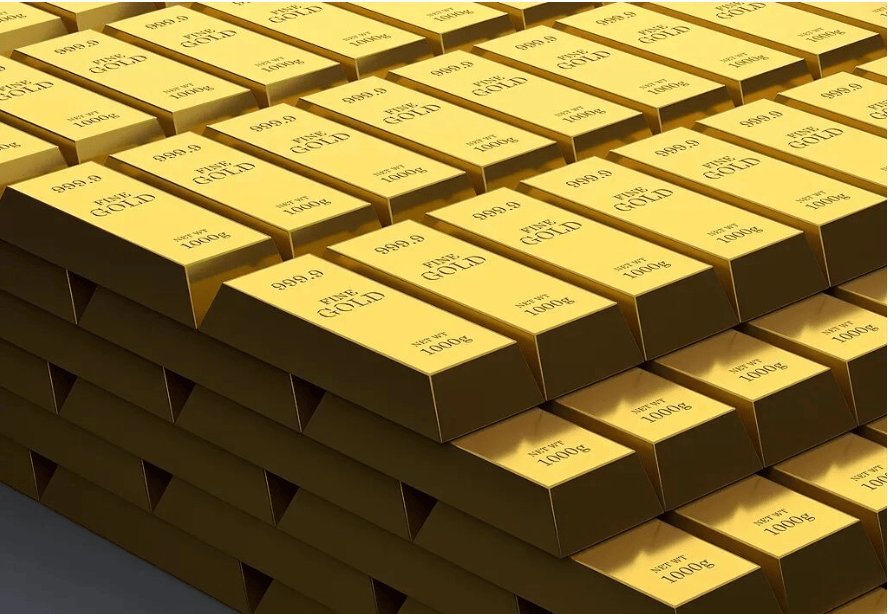
However, the excessive privilege of the dollar is actually a winner’s curse, because the dollar has (almost) unlimited ability to print money to meet foreign demands, thus enjoying an unprecedented fiscal and trade deficit, on the other hand, the inevitable increase in foreign debt and consumption. Due to the lack of internal fiscal discipline due to the surge in spending, U.S. debt has risen to such a tipping point that interest payments today are one of the biggest consumption of fiscal resources.
As Wolff admits, gold is a good hedge against inflation in uncertain times. The latest financial stability report of the ECB confirms that gold is a ” safe haven ” in a time of volatility in financial markets or intensifying geopolitical policy uncertainty . Although central bank governors in the past believed that holding gold had no ” yield ” , from August 1971 (Nixon decoupled the US dollar from gold) to the end of April 2025 , the compound annual growth rate of gold prices ( CAGR ) was 8.8% , while the compound annual growth rate of total U.S. federal debt during the same period was 8.7 % . Currently , gold prices have reached a new high of $ 3,500 per ounce. This rough comparison conceals the sharp fluctuations in gold prices over the past 54 years, but if this relationship is true, gold prices hedge the trajectory of the Fed’s debt growth.


