on September 22 local time, the three major U.S. stock indexes closed up collectively, and both hit record highs during the intraday and closing. The core driver of this rise comes from the strong performance of Nvidia and Oracle.
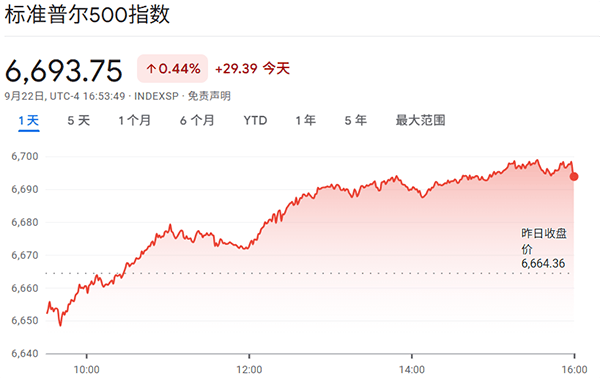
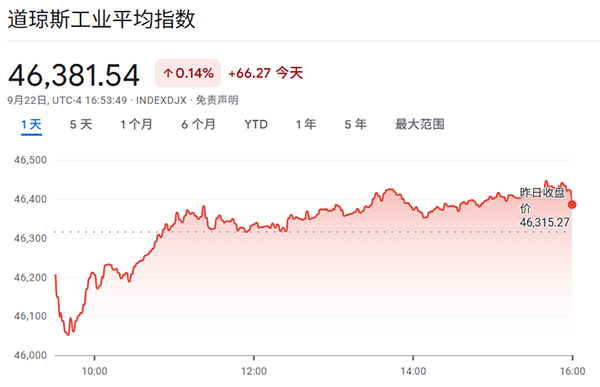
Specifically, the S&P 500 rose 0.44% to close at 6693.75 points; the Nasdaq Composite rose 0.70% to 22,788.98 points; the Dow Jones Industrial Average rose 66.27 points, or 0.14%, to close at 46,381.54 points. All three major stock indexes hit record highs during trading days and ended up at record highs.

On the same day, Nvidia announced that it would invest $100 billion in artificial intelligence company OpenAI to build a data center. After the news was announced, Sam Stovall, chief investment strategist at CFRA Research, said the collaboration may mean that trading in the artificial intelligence sector “will continue to drive earnings per share and share price growth, at least until 2026 or even longer.”
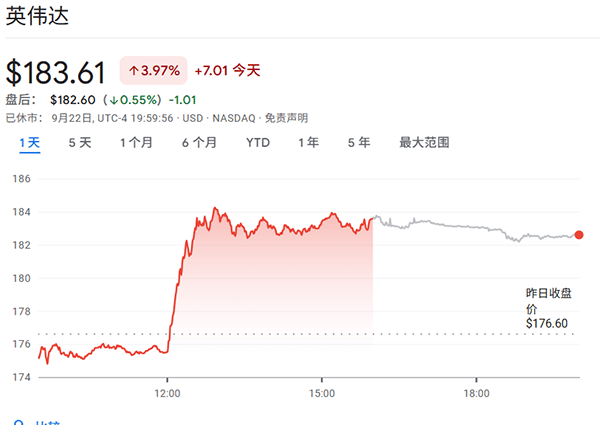
The news boosted investors’ confidence in the artificial intelligence sector. Therefore, although the US stock market opened lower, the index eventually reversed its decline driven by technology stocks such as Nvidia. As of the close, Nvidia’s stock price rose 3.9%.
In addition, among other stocks in the technology sector, Oracle performed well. Affected by the news of the replacement of the company’s CEO, Oracle’s stock price rose 6% on the same day, with a cumulative increase of 45% this month.
At the same time, Apple’s stock price also performed well, closing up 4%, mainly benefiting from the market’s expectations of strong demand for a new generation of iPhones.
In contrast, Amazon, Meta, and Broadcom fell by more than 1%, while Google fell by nearly 1%, indicating that technology stocks are significantly internalized.
Despite the continued upward trend in stocks, investors are still paying close attention to the Fed’s policy trends. According to Reuters, on September 22 local time, several Federal Reserve officials delivered speeches on the prospects of monetary policy, with obvious differences in their statements.
Atlanta Fed Chairman Raphael Bostic pointed out that U.S. inflation is still “too high and lasts too long” and does not support further rate cuts this year. He stressed that the Fed should maintain its current policy stance and avoid excessive easing.
St. Louis Fed Chairman Alberto Musalem also sent a cautious signal, saying that further rate cuts could pose a risk of excessive policy easing when inflation remains above the 2% target and more economic data is needed to determine follow-up actions.
Cleveland Fed Chairman Beth Hammack said that the current policy is still “slightly restrictive” and that adjustments must be very cautious before inflationary pressures completely subside to prevent the economy from overheating.
However, the new Fed director Stephen Miran openly supports a more radical stance of easing. He cast his only vote against the 25 basis points rate cuts at a recent Federal Open Market Committee (FOMC) meeting, saying that the 25 basis points reduction is not enough, and noted that the current interest rate level is about two percentage points higher than the “neutral interest rate” suitable for economic growth, calling for a larger rate cut to stimulate economic activity.


